The Prophet Zechariah
A Hebrew prophet looks down towards the promise fulfilled below
Read the narration
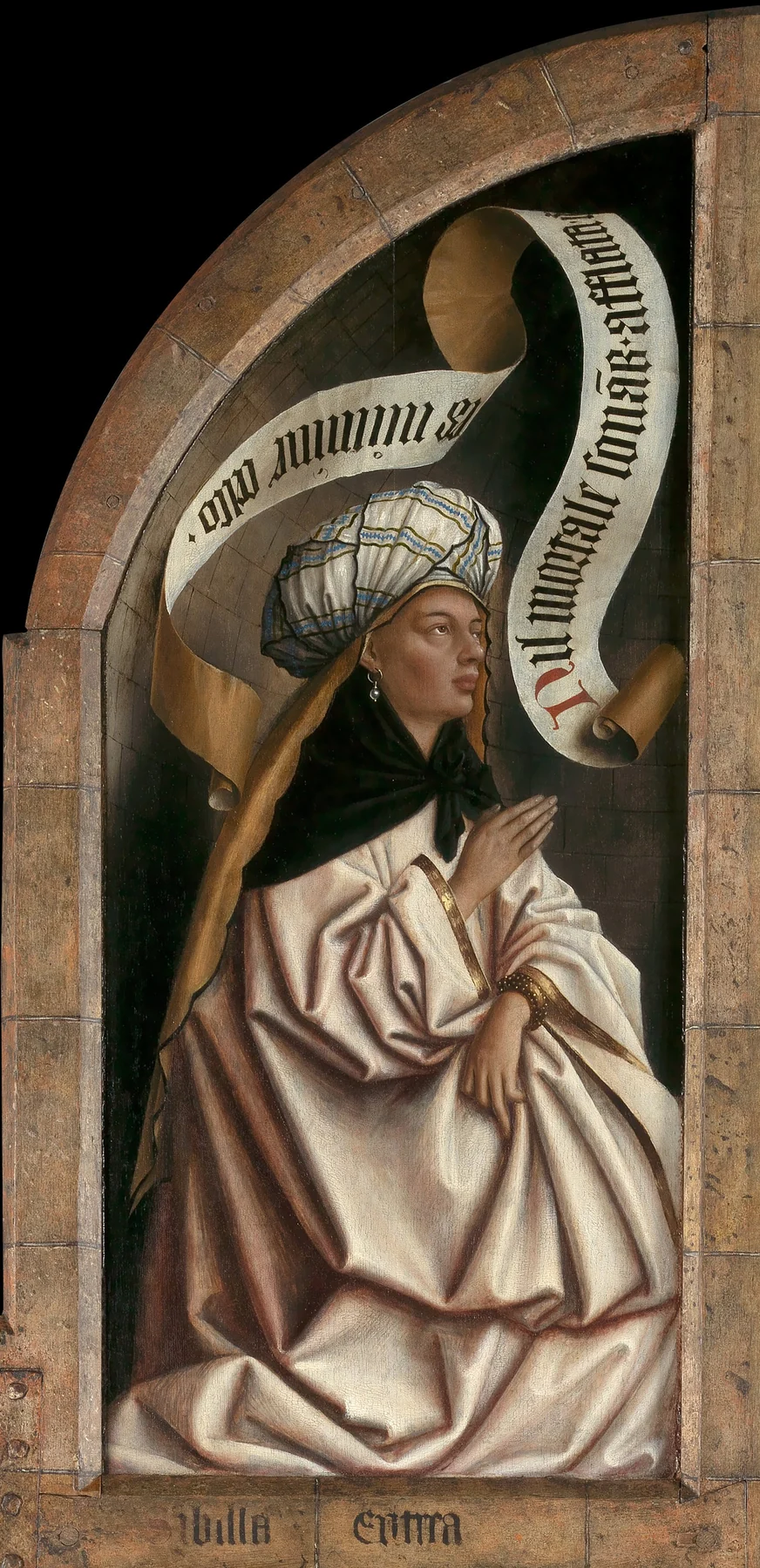
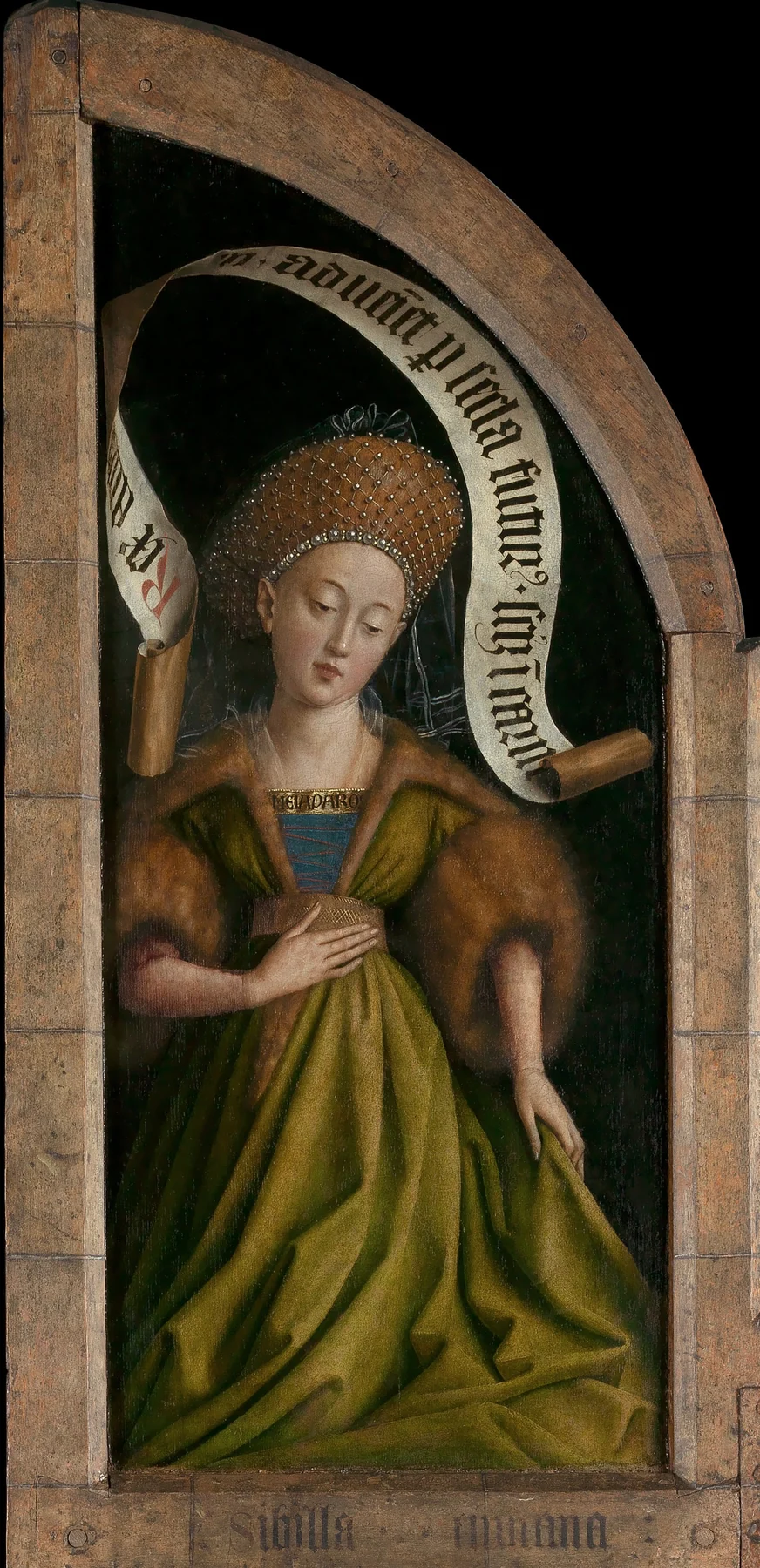
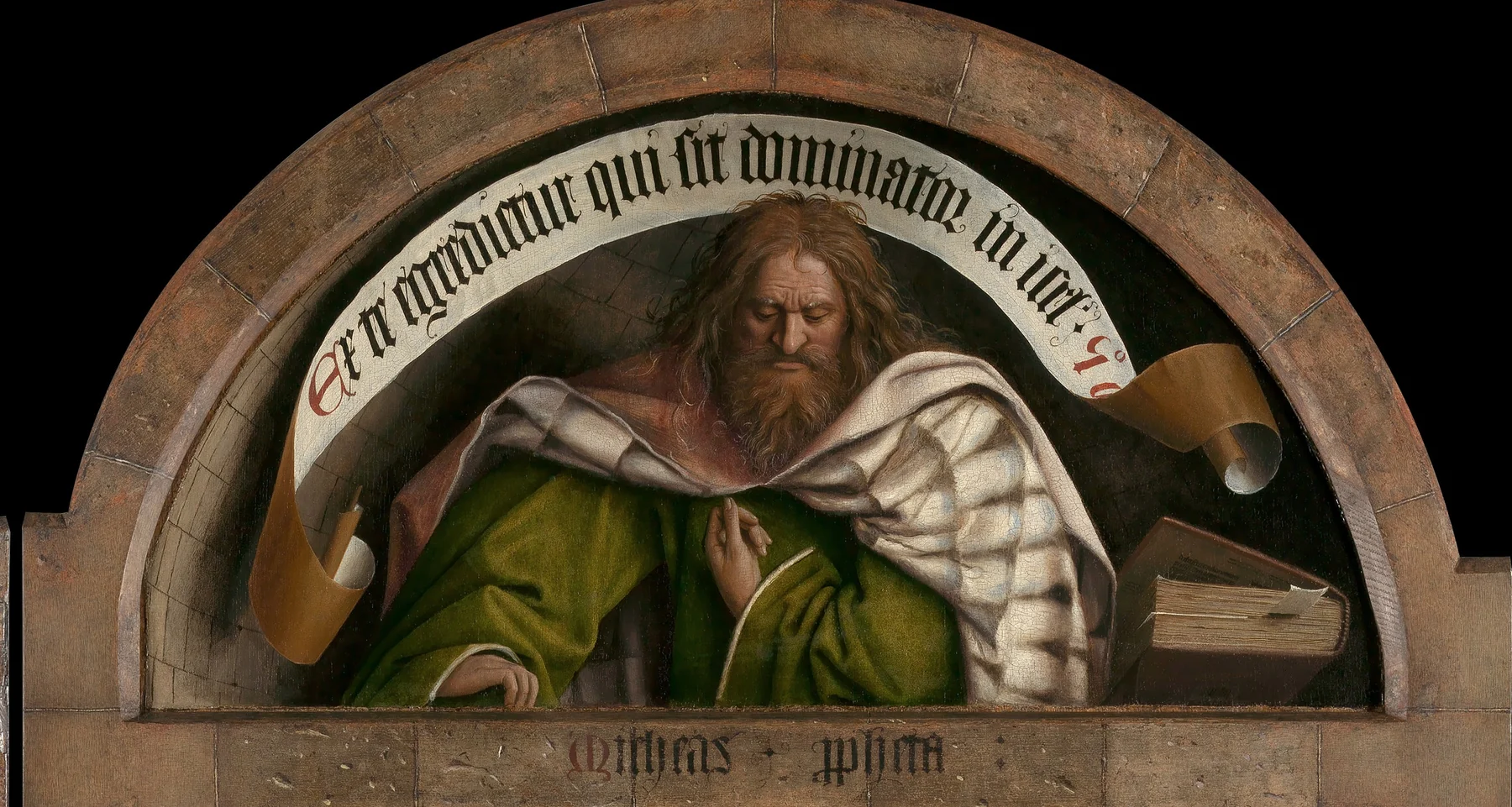
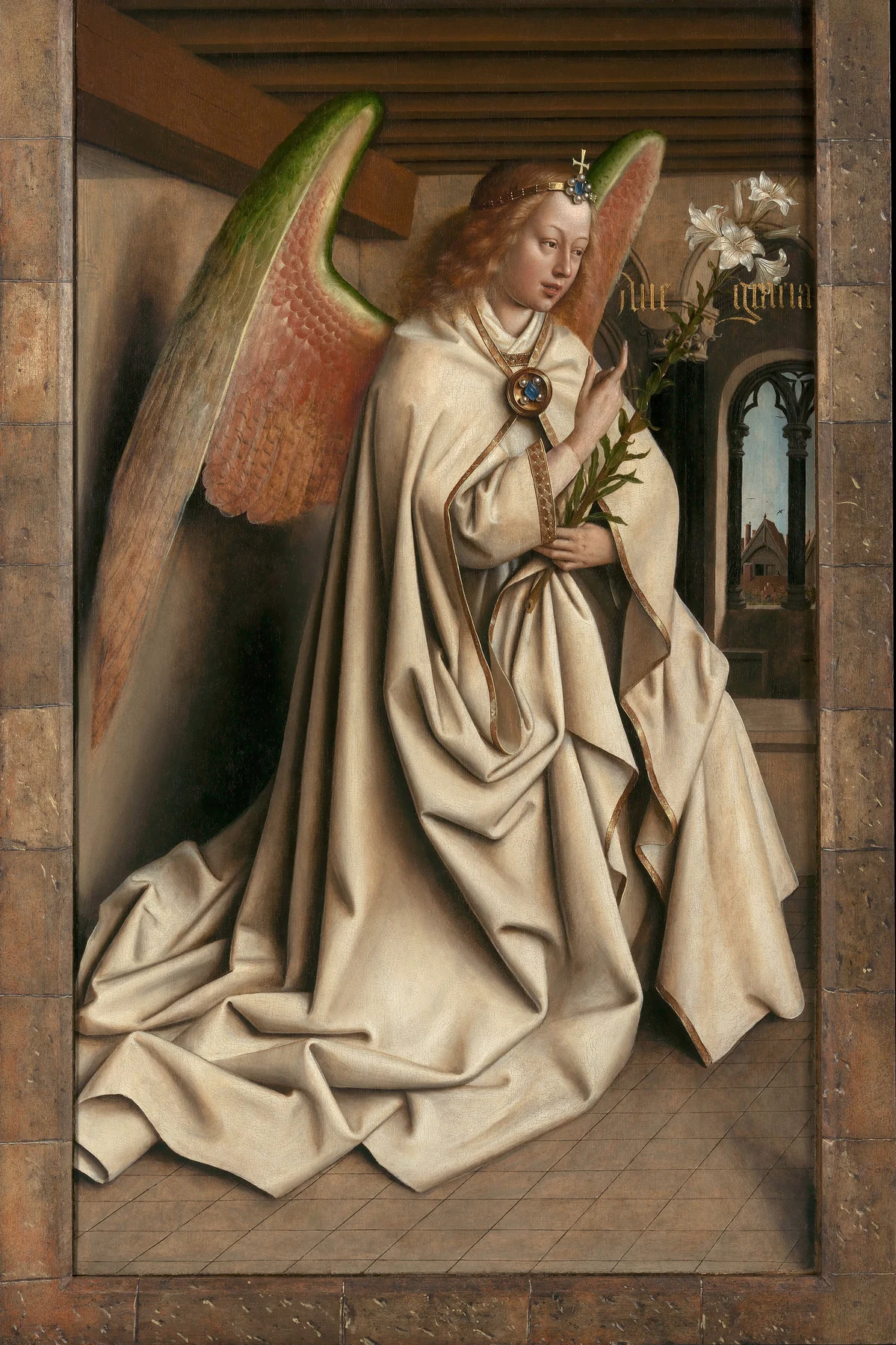
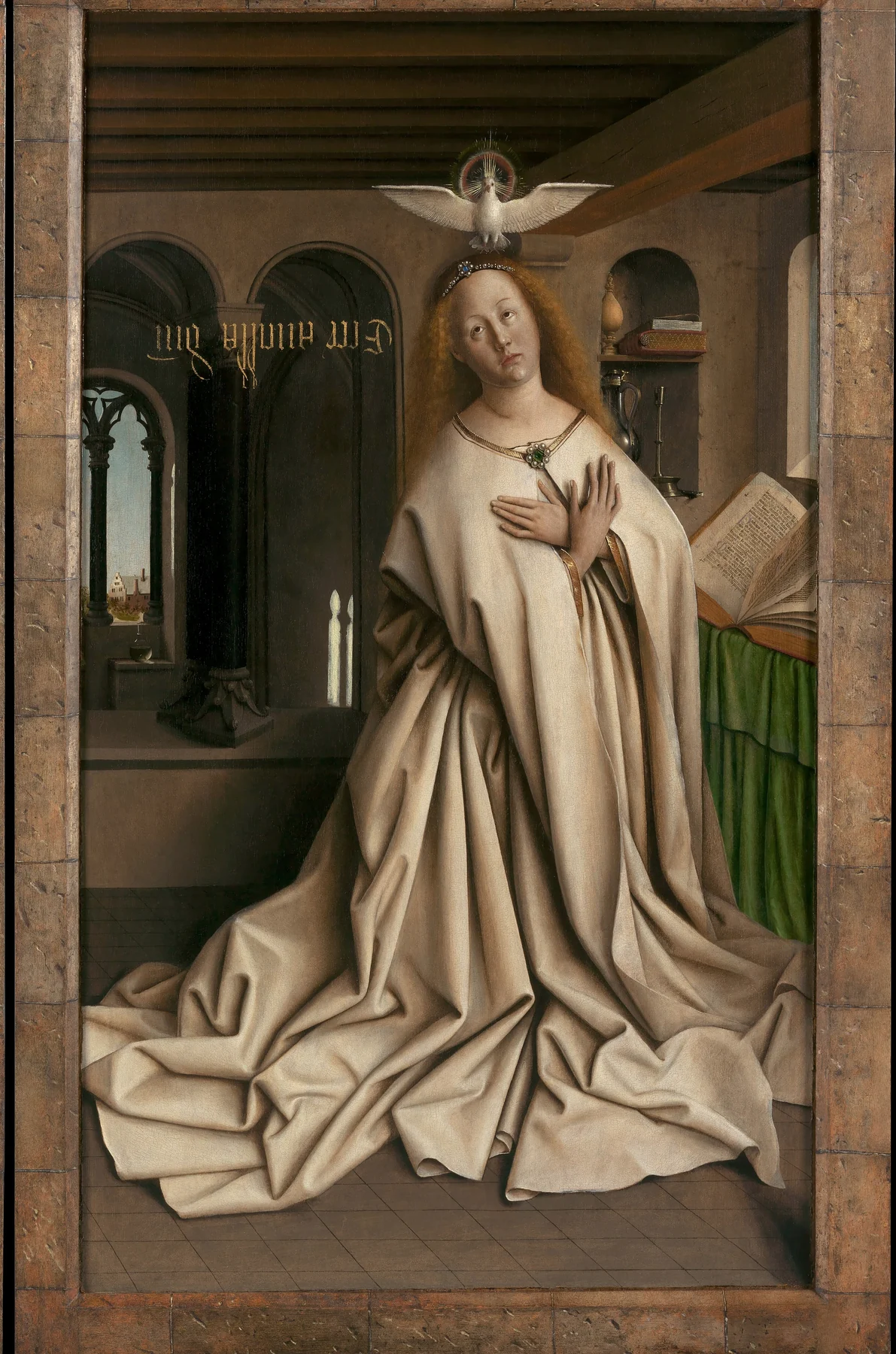
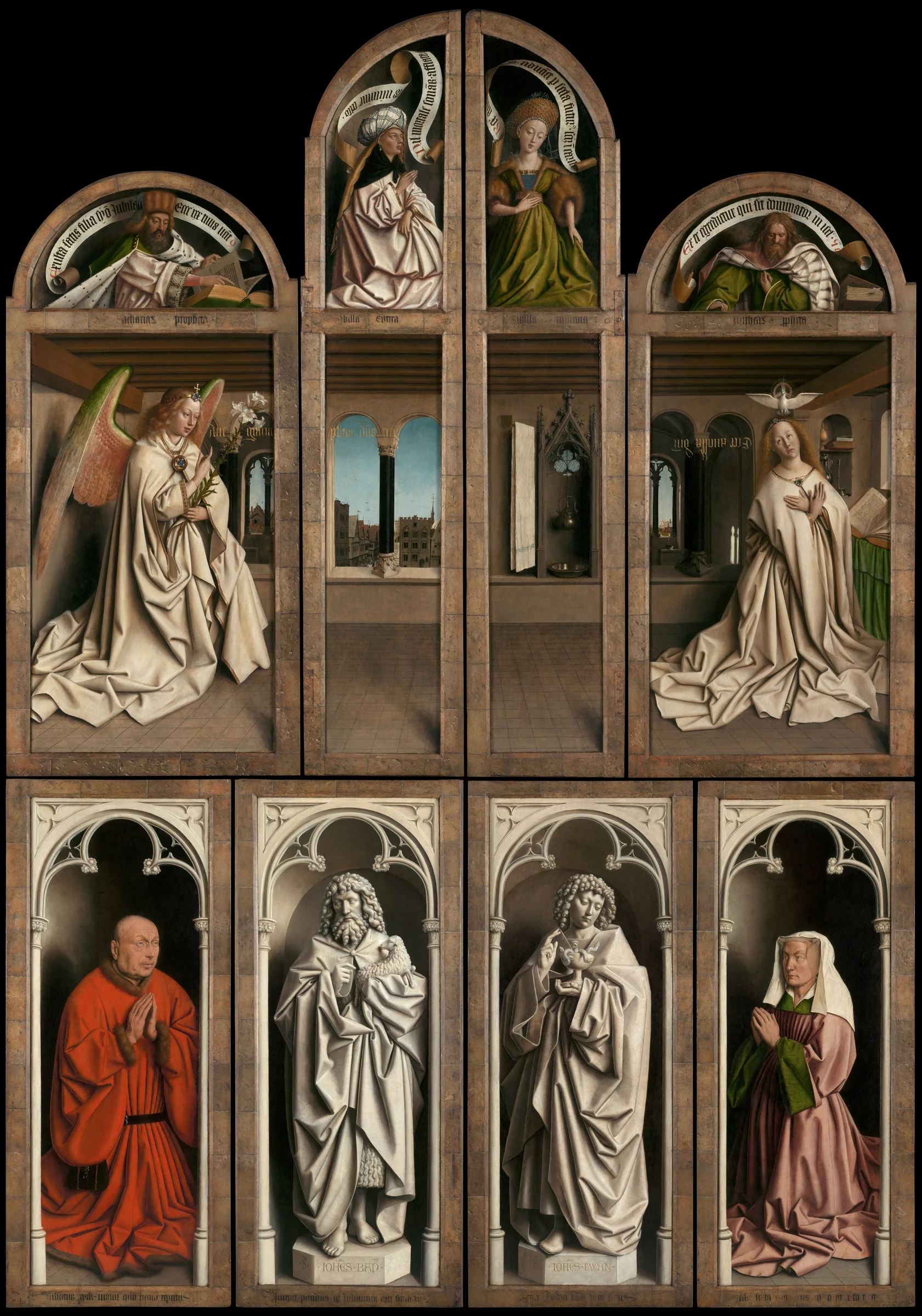
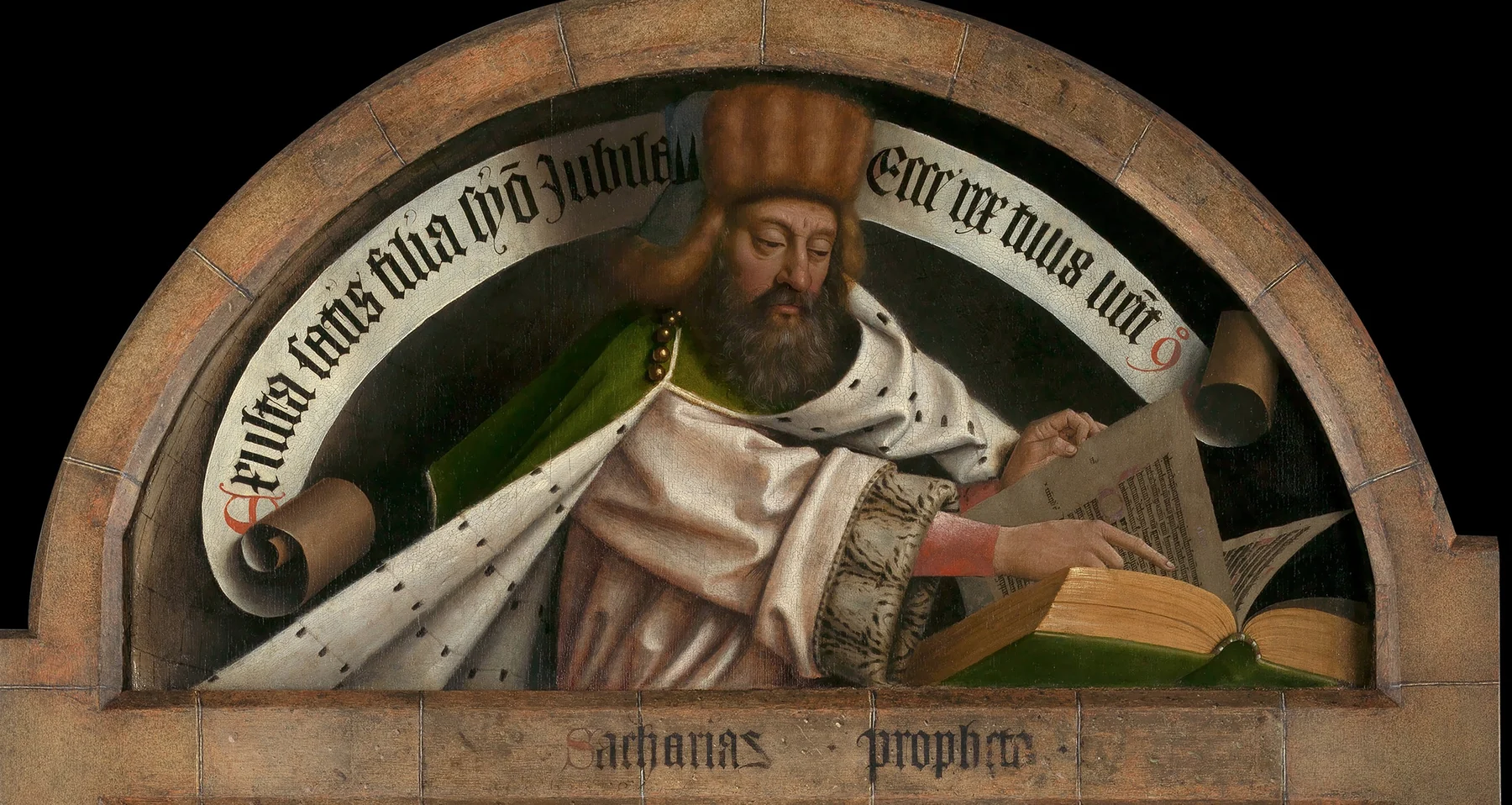
Begin at the upper left. Zechariah leans over the stone ledge as if the painted architecture were real. In medieval Christian interpretation, his prophetic words helped announce the coming king and Messiah. Notice how the parchment unfurls into our space and how his heavy book rests against the curve of the lunette. He belongs to the Hebrew scriptures; the two sibyls beside him come from the pagan classical world. Together, the four figures above the Annunciation imply that Christ’s arrival was anticipated across different traditions. Van Eyck does not make Zechariah a remote symbol. The creased face, lowered eyes and absorbed posture turn prophecy into an act of reading—one text looking down upon the moment in which Christians believed it became flesh.
Look closer
- The scroll curling out towards you
- His downward gaze into the Annunciation
- Painted stone that behaves like real architecture
Careful: The inscriptions frame a Christian reading of Hebrew prophecy; they are not neutral translations of the prophets’ original historical contexts.
Panel record & interpretation ↗